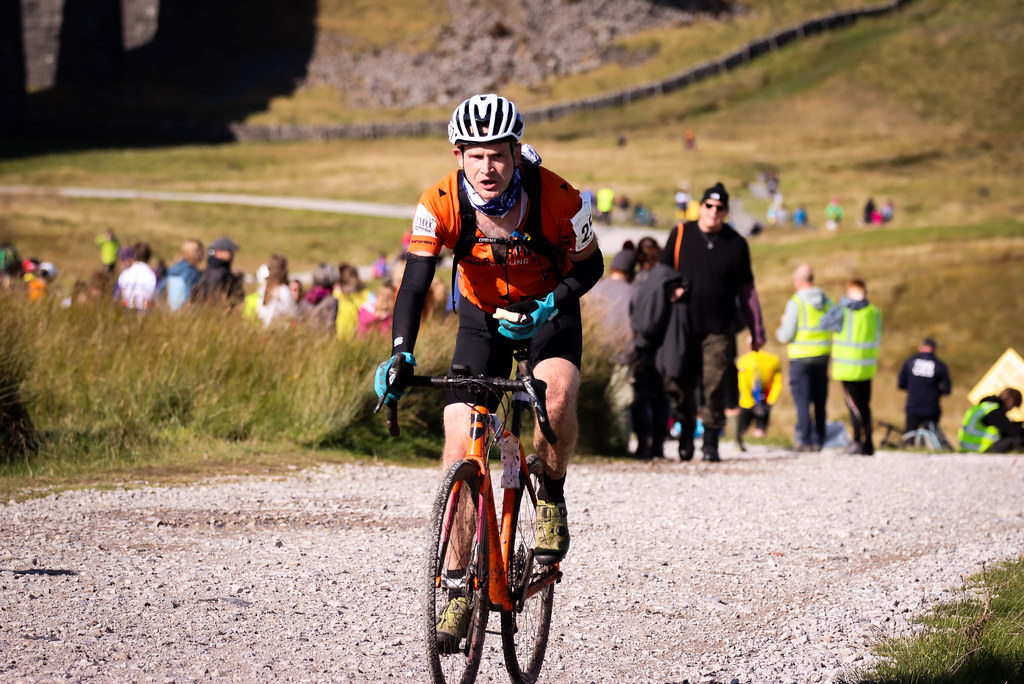
There are cyclocross races, there are fell races, and there are endurance events. Then there is the 3 Peaks Cyclocross – a race that takes bits of all three, throws them onto the side of a Yorkshire mountain and asks competitors to bring a bicycle along for good measure.
On Sunday 27 September, one of British cycling’s great eccentric traditions returns to the Yorkshire Dales for its 62nd edition.
Hundreds of riders will set off from Helwith Bridge to tackle Ingleborough, Whernside and Pen-y-Ghent before, with luck and everything still attached, returning to where they started.
Calling it a cyclocross race only tells half the story.
The modern course covers 61 kilometres – 38 miles in old money – and includes around 1,524 metres (5,000 feet) of climbing. Approximately 33km is unsurfaced and somewhere between six and eight kilometres can be effectively unrideable.
In other words, at various points the bicycle stops being a means of transport and becomes luggage.
It started with a 14-year-old and a bicycle
The story goes back to 1959, when 14-year-old Kevin Watson from Skipton decided to make a circuit of the Yorkshire Three Peaks with his bike.
He rode it when he could, pushed it when he couldn’t and carried it when there was no other option, getting himself around Whernside, Ingleborough and Pen-y-Ghent in six hours and 45 minutes.
Most teenagers’ questionable ideas disappear without trace. Watson’s eventually became one of Britain’s most enduring cycle races.
John Rawnsley and Harry Bond developed the concept into an organised competition, and the first official Three Peaks Cyclo-Cross was held in 1961.
Rawnsley didn’t merely organise the thing. He won it.
His time was 3 hours 21 minutes 35 seconds, following an extraordinarily close contest with Bond.
Rawnsley went on to organise the first 50 editions and remained inseparable from the event’s history until his death in 2019.
The race he created has changed considerably. The original was around 25 miles; today’s 61km monster combines road racing, rough tracks, open fell, steep climbs, technical descents and substantial periods in which carrying your bike is considerably quicker than attempting to ride it.
Cyclocross skills aren’t enough
That’s part of the fascination of the Three Peaks.
A technically brilliant cyclocross rider can arrive expecting to be perfectly equipped for the job and discover that conventional CX skills only get you so far.
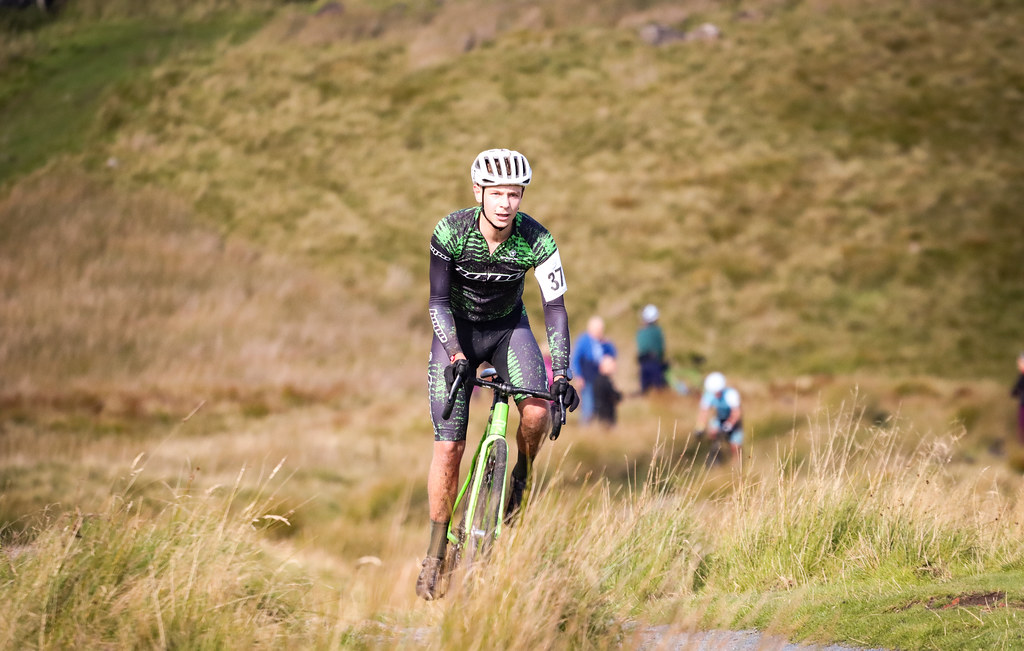
Road speed matters. So does climbing. Fell-running ability helps enormously. You need confidence descending over terrain that doesn’t particularly resemble a bicycle route, and learning how to shoulder a bike without wasting energy suddenly becomes a valuable racing skill.
The perfect Three Peaks rider is therefore a slightly unusual creation: part cyclist, part runner and part mountain goat.
Kings and queens of the Peaks
The race’s winners list contains some formidable names from British off-road cycling.
Eric Stone won five times, while Tim Gould produced one of the great periods of Three Peaks domination, winning six consecutive editions between 1984 and 1989. Gould later became one of Britain’s leading mountain bikers, but his extraordinary run in Yorkshire remains part of Peaks folklore.
Nick Craig first won in 1991 and, remarkably, returned to take further victories in 2009 and 2011. His 2009 success was particularly memorable, defeating Rob Jebb by just 15 seconds.
And when it comes to the Three Peaks, nobody has a record quite like Jebb.
The Hope rider has won an astonishing 13 editions, beginning in 2000 and most recently taking overall victory in 2022. His combination of elite-level fell running and cycling strength might almost have been designed specifically for this race.
Paul Oldham interrupted the Jebb era with four consecutive victories from 2015 to 2018 before Jebb returned to the top in 2019. More recently, Giles Drake won back-to-back editions in 2023 and 2024.
Then, last year, things became even quicker.
Jenson Young stormed around the course in 2 hours 49 minutes 17 seconds, setting a new course record.
Behind him was a particularly interesting visitor: Australian endurance specialist Lachlan Morton. Returning six years after finishing fourth on his Three Peaks debut in 2019, Morton took second place.
The women’s race has its own impressive history.
Louise Robinson won five editions between 2002 and 2011, while Christina Wiejak took consecutive victories in 2017 and 2018.
Victoria Wilkinson’s 2012 win produced one of the race’s nicest historical connections: her father Chris had won the men’s event 40 years earlier.
More recently, Bryony Halcrow has made the race her own. The Hope Tech Factory Racing rider first won in 2023 and successfully defended her title in both 2024 and 2025.
This year she’s coming back for number four.
Morton, Brownlee, Jebb – 2026 has some names
The 2026 start list should make things particularly interesting.
Lachlan Morton is returning after last year’s second place. According to the organisers, the Australian’s 2025 performance produced the third-fastest time in the history of the event.
And he’s not the only endurance star having a go.
Double Olympic triathlon champion Alistair Brownlee is entered, which seems appropriate for a race that rewards an ability to do several different painful things extremely well.
Former champions Giles Drake and Rob Jebb are also on the list, while 2023 runner-up Oliver Dawson adds further strength to the senior field.
In the women’s competition, Halcrow starts with race number one as she attempts to make it four victories in succession. Younger riders including Elsie Haygarth and Matilda McKibben add another intriguing element to the competition.
Anyone who fancied joining them but left it late is out of luck. Once again, entries were heavily oversubscribed.
Bigger tyres, but leave the mountain bike at home
There are a few changes for 2026.
The permitted maximum tyre size has increased, with regulations accepting tyres marked up to 40-622 – approximately 700 x 38C under the organisers’ guidance.
Don’t get too excited, though.
Suspension remains prohibited and this is still a race for cyclocross bikes with drop handlebars. Turning up with a full-suspension mountain bike and an optimistic expression isn’t going to get you onto the start line.
The minimum age has also been brought into line with British Cycling regulations, allowing riders to participate from 1 September in the year of their 16th birthday.
Outside assistance is tightly controlled. Technical help, bike changes and food and drink hand-ups are restricted to the designated pits at Cold Cotes and Ribblehead.
And practising the complete course beforehand isn’t an option. Significant sections cross footpaths and private land where cycling permission is granted specifically for race day.
Part of the Three Peaks experience is therefore discovering precisely what you’ve signed yourself up for.
Three mountains. One very long morning.
At 9.30am the field rolls away from Helwith Bridge.
The opening 5.5km is neutralised behind a safety car. That is possibly the last civilised part of the morning.
Once racing begins, Ingleborough provides the first major test. Whernside follows, before Pen-y-Ghent delivers the final mountain challenge.
Timing points scattered around the course allow organisers and spectators to track progress as riders gradually work their way towards Horton-in-Ribblesdale and, eventually, the finish back at Helwith Bridge.
For the very best, it’s now possible to complete the whole thing in less than three hours.
For plenty of others, completing it at all is quite sufficient.
And perhaps that’s the secret of the Three Peaks.
Cycling has reinvented itself repeatedly since John Rawnsley and Harry Bond organised that first race in 1961. Mountain biking arrived, cyclocross became increasingly specialised and gravel racing discovered that combining drop handlebars with unsuitable terrain could be tremendous fun.
The Three Peaks was already doing its own version decades earlier.
It’s difficult, occasionally ridiculous and almost certainly unlike any other cyclocross race its competitors will ride all year.
On 27 September, hundreds of them will once again head into the Yorkshire Dales and discover one of British cycling’s more enduring truths:
Sometimes the fastest way to ride a bicycle is to pick it up and run.

