
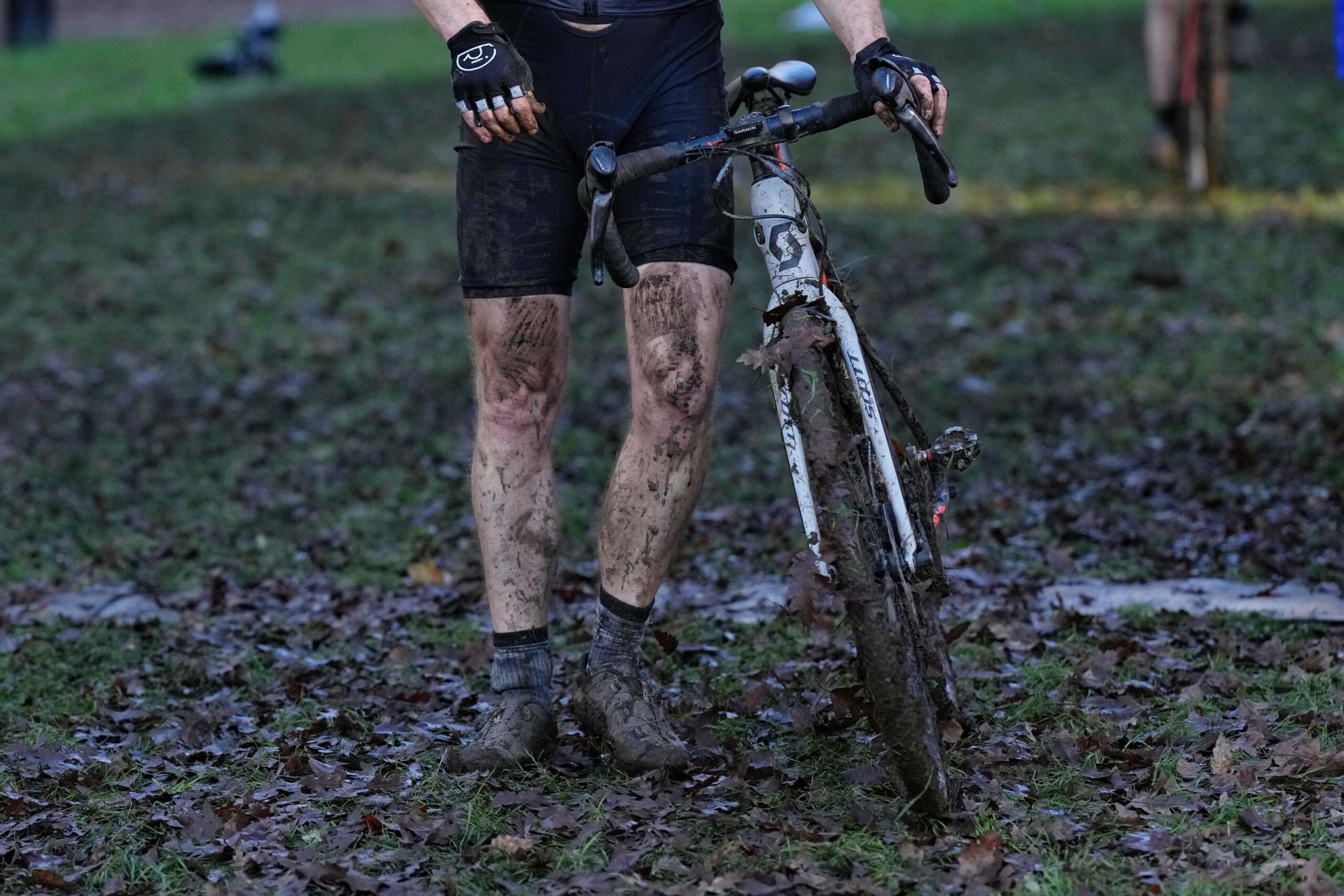
Your first cyclocross race can feel chaotic, confusing and far harder than expected – but that is also part of the appeal. From frantic starts and muddy mistakes to the strange urge to sign up again afterwards, here is what nobody really tells you before you pin on a number for the first time.
Your first cyclocross race will probably begin with a very sensible thought: How hard can an hour of riding around a field really be? Then the whistle goes. Within thirty seconds your heart rate is somewhere near the ceiling, somebody has disappeared past you at a speed that seems completely unreasonable, there is mud on your glasses, and you are trying to remember why you thought this looked like fun.
The good news is that almost everybody has been there. Cyclocross has a reputation for being one of the most welcoming forms of cycle racing, and that reputation is deserved. But there are plenty of things nobody really tells you before your first race – things that have little to do with tyre pressures, gearing or whether you can shoulder a bike properly.
You Do Not Need to Be “Good Enough”
Perhaps the biggest obstacle to entering your first cyclocross race is the feeling that you need to reach a certain standard before turning up. You don’t.
Local cyclocross races contain an enormous range of abilities. At the sharp end there may be national-level riders fighting for every second. Further back there will be people racing purely for enjoyment, riders returning after years away, mountain bikers giving cyclocross a try, juniors, veterans and complete beginners.
Nobody expects your first race to be perfect. One of the pleasures of cyclocross is that everyone is racing their own race. The winner may be trying to gain ten seconds on a rival while somebody further down the field is simply trying to ride a tricky bank without putting a foot down. Both victories matter.
The Start Is More Intense Than You Expect
You can spend twenty minutes riding around before the race feeling perfectly relaxed. Then you are called to the grid and suddenly everything changes.
Riders shuffle forward. Pedals are clipped in. People begin staring at the first corner as though their lives depend on reaching it first. The opening sprint of a cyclocross race can be surprisingly aggressive, even at local level.
Do not panic. Your first race does not need to be decided in the first hundred metres. Hold your line, avoid sudden movements and give other riders room. If twenty riders disappear ahead of you, let them go. Once the opening chaos settles down, you will begin finding riders of a similar speed. That is when your race really starts.
The First Lap Feels Ridiculously Fast
During practice, everything appears manageable. That muddy corner? Easy. The small bank? No problem. The off-camber section? Fine.
Then you arrive there on lap one with riders immediately ahead and behind you, your lungs already burning and your brain trying to process several decisions at once. Suddenly everything feels twice as difficult.
This is completely normal. Cyclocross is as much about making decisions while tired as it is about bike handling. Your ability to ride a technical section when relaxed is very different from your ability to ride it while racing. The more races you do, the calmer everything becomes.
You Will Probably Start Too Hard
Almost everybody does. The excitement of the start, the crowd, the riders around you and the temptation to stay with somebody slightly faster can make the opening lap feel like a sprint.
Then, halfway around lap two, reality arrives.
A cyclocross race may only last around forty minutes to an hour depending on category, but it is surprisingly easy to empty the tank early. Try to settle into a rhythm. You should be working hard, but ideally not so hard that you are already questioning your life choices after five minutes.
If you feel unexpectedly good halfway through the race, you can always go faster.

People Will Overtake You – Possibly Repeatedly
This is something new racers sometimes worry about unnecessarily. You will be overtaken. You might even be lapped by the leaders. Nobody cares.
If a faster rider comes through, simply hold a predictable line and give them space when it is safe. You do not need to ride into a hedge or stop completely. Experienced riders are used to navigating traffic.
And remember: being lapped by somebody who races nationally is not evidence that you are terrible at cyclocross. It is evidence that they are very, very good at it.
Running Is More Tiring Than It Looks
Watching cyclocross on television can give the impression that riders casually jump off the bike, jog elegantly over some barriers and remount without losing speed.
Try it with a heart rate near maximum and things become slightly different.
Even a short running section can feel brutal. Do not worry about producing a professional-looking dismount on your first race. Get off safely, carry or push the bike efficiently, and get moving again.
A clean, controlled dismount is far better than attempting something spectacular and ending up wrapped around the course tape.
You Will Make Mistakes
You will select the wrong gear. You will arrive at a corner too fast. You will probably arrive at another corner far too slowly.
You may miss a pedal after a remount, choose the wrong line through the mud or discover that the section you rode perfectly in practice has mysteriously become impossible. None of this matters.
Cyclocross rewards people who recover quickly from mistakes. Lose five seconds? Keep riding. Slip on a corner? Get up. Drop your chain? Fix it. The worst thing you can do is spend the next half-lap thinking about what just happened.
Your Bike Will Make Strange Noises
Mud, grass and leaves have an impressive ability to find their way into every part of a bicycle.
By halfway through a wet race your bike may sound considerably less healthy than it did at the start. Do not immediately assume something catastrophic has happened. Cyclocross bikes live difficult lives.
It is, however, worth checking the bike afterwards. Mud trapped around the brakes, derailleur and cassette can cause problems if left there. Cleaning the bike after racing is not the glamorous part of cyclocross, but it quickly becomes part of the routine.
What You Wear Matters Less Than You Think
You will see riders in expensive skinsuits, matching team kit and carefully coordinated equipment. Ignore it.
Wear comfortable cycling clothing suitable for the weather. If it is cold, remember that standing around before the start can feel much colder than racing. Bring something warm to put on afterwards.
Also bring spare clothing. Cyclocross has a remarkable ability to cover socks, shoes, legs and almost everything else in mud. Driving home wearing wet race kit is an experience best avoided. A plastic bag for muddy clothing is one of the most useful pieces of equipment you can bring.
The Course Changes Constantly
Hundreds of tyres passing over the same ground can transform a grassy corner into mud remarkably quickly. Racing lines develop. Ruts appear. Previously rideable climbs become running sections.
This is one of the defining features of cyclocross. Look ahead. Watch what other riders are doing. If everybody suddenly starts taking a different line through a corner, there is probably a reason.
You Will Hear People Shouting at You
Most of the time this is encouragement.
Cyclocross spectators are famous for standing next to the hardest section of the course and enthusiastically shouting at riders attempting to negotiate it. You may hear your name. You may hear completely generic encouragement. Occasionally somebody will ring a cowbell several inches from your head.
This is normal. It is also one of the reasons cyclocross has such a distinctive atmosphere.
Finishing Position Is Almost Irrelevant
After your first race, you will probably check the results. That is natural. But the number beside your name does not tell you very much.
Perhaps you finished 43rd. What the results do not show is that you finally rode the technical descent on lap four. Or that you caught the rider who had been twenty seconds ahead. Or that you managed to race for nearly an hour without stopping.
Those are the things you should remember. Your first cyclocross race is simply a starting point.
The Final Lap Is Somehow Brilliant
At some stage during the race you may promise yourself that you are never doing this again. Then you hear the bell for the final lap.
Suddenly there is another rider twenty metres ahead who absolutely must be caught. Your legs discover a little extra power. You attack the final corners, sprint towards the finish and cross the line completely exhausted.
Five minutes later you will probably be talking about the next race.
That is the part nobody really warns you about.
Cyclocross is uncomfortable, chaotic, muddy and occasionally ridiculous. It is also enormously addictive.
You do not need perfect technique. You do not need the most expensive bike. You do not need years of racing experience. You simply need to enter.
Because after your first cyclocross race, the question usually stops being “Am I good enough to race?”
It becomes:
“When’s the next one?”

